

My Love Letter to SoulCycle
Updated: Jun 26

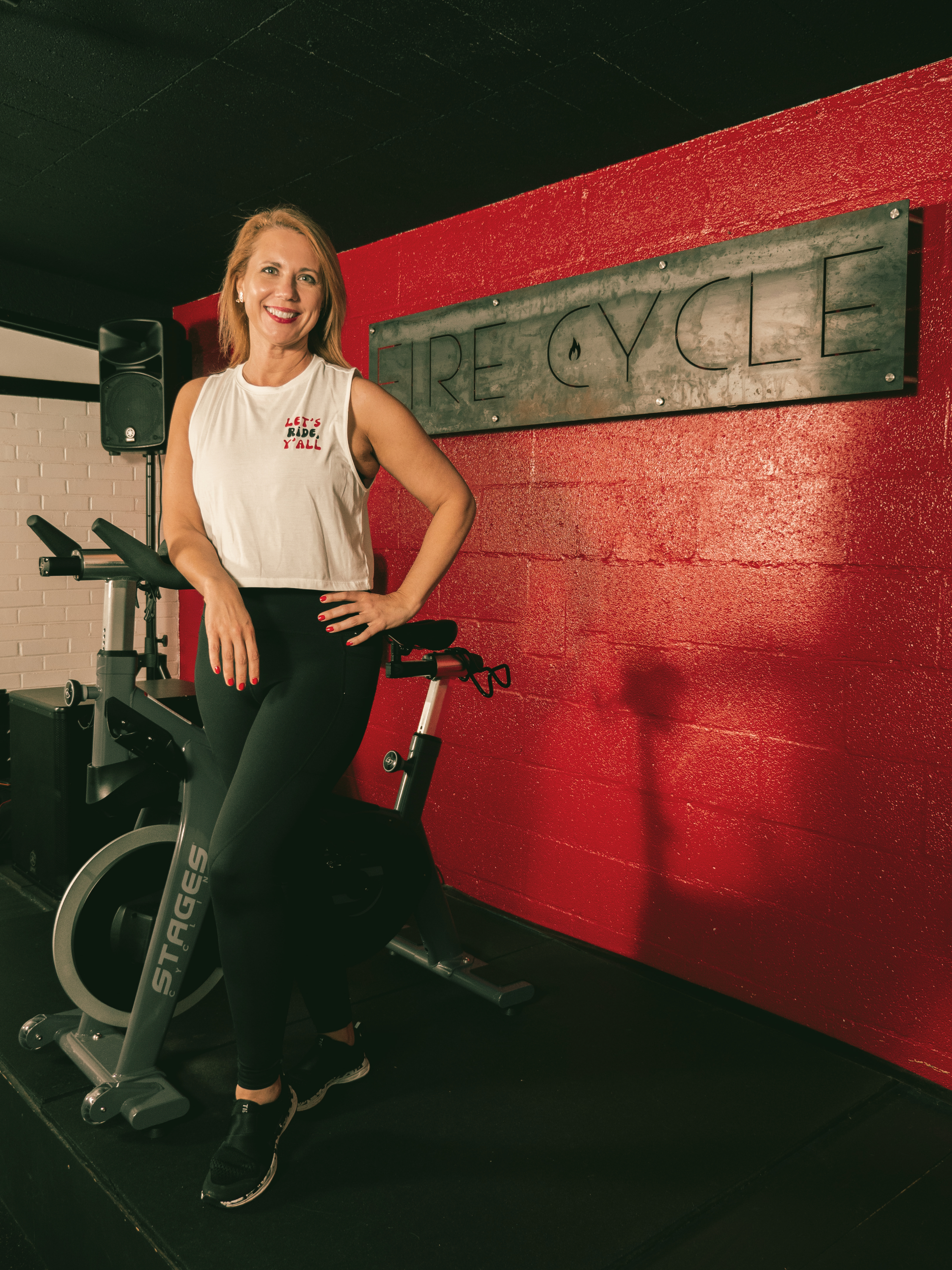
SoulCycle is the reason FireCycle exists, and this blog post is my thank‑you note, well, actually it is my love letter, to the studio that first showed me how movement, music, and community could live in the same dark room.
The Originals
SoulCycle didn’t invent spinning, but in 2006 Julie Rice and Elizabeth Cutler did something genuinely revolutionary with it in a small studio on New York City’s Upper West Side. They stripped away the numbers and turned indoor cycling into a candlelit, music‑driven, community‑centered experience that helped spark the entire boutique fitness movement. From the beginning, the focus wasn’t just on calories or cadence; it was on how people felt when they walked out the door—lighter, more connected, more themselves.
What This Post Is Not
There are endless think pieces about SoulCycle’s business decisions, its evolution from a scrappy, female‑founded studio into a major brand under Equinox, and all the ways people think they got it right or wrong. If that’s what you’re looking for, the internet will gladly serve you many, many perspectives. This isn’t that. This is about one rider (me) who walked into a studio, clipped in, and found a kind of beauty and release that eventually became a 14‑bike independent (very scrappy) rhythm riding studio called FireCycle Abilene.
My First Ride: Confused And Hooked
My first SoulCycle class was in Chicago, visiting my sister. I showed up in full running gear because at that time, I saw myself as “a runner.” I sat in the saddle the entire ride, confused, because it felt less like a workout and more like a rock concert. I didn’t understand the choreography, the tap backs, the push‑ups on the handlebars. I thought it was weird. But I left smiling. I left lighter. Something in the music choices, the dark room, and the way the instructor held space took just a tiny bit of weight off my spirit.
It took me a while to go back to SoulCycle, mainly because they were only in major markets, and at the time, “classes” were only something I took with others. My thinking was, if I am on my own, why would I go to a class? I should just run or get on a stationary bike at the gym.
But, later, visiting my in‑laws in Dallas, I tried another SoulCycle class. I remember feeling like I’d sweated out some of the invisible heaviness of everyday life, the kind that doesn’t have a clear source but clings anyway. I didn’t have language for it yet, but I knew this wasn’t just “high‑intensity cardio” or “hustle” culture. It was something more like emotional hygiene.
Grief, Dementia, And One Hour That Was Mine
Yet, the real connection happened in a very different season of my life. My father‑in‑law passed away suddenly. My mother‑in‑law was living with early‑onset dementia. We were driving three hours, sometimes week after week, leaving Friday after work just to check in, adjust care, or simply sit with her in the confusion of a disease that doesn’t let anyone off easy.
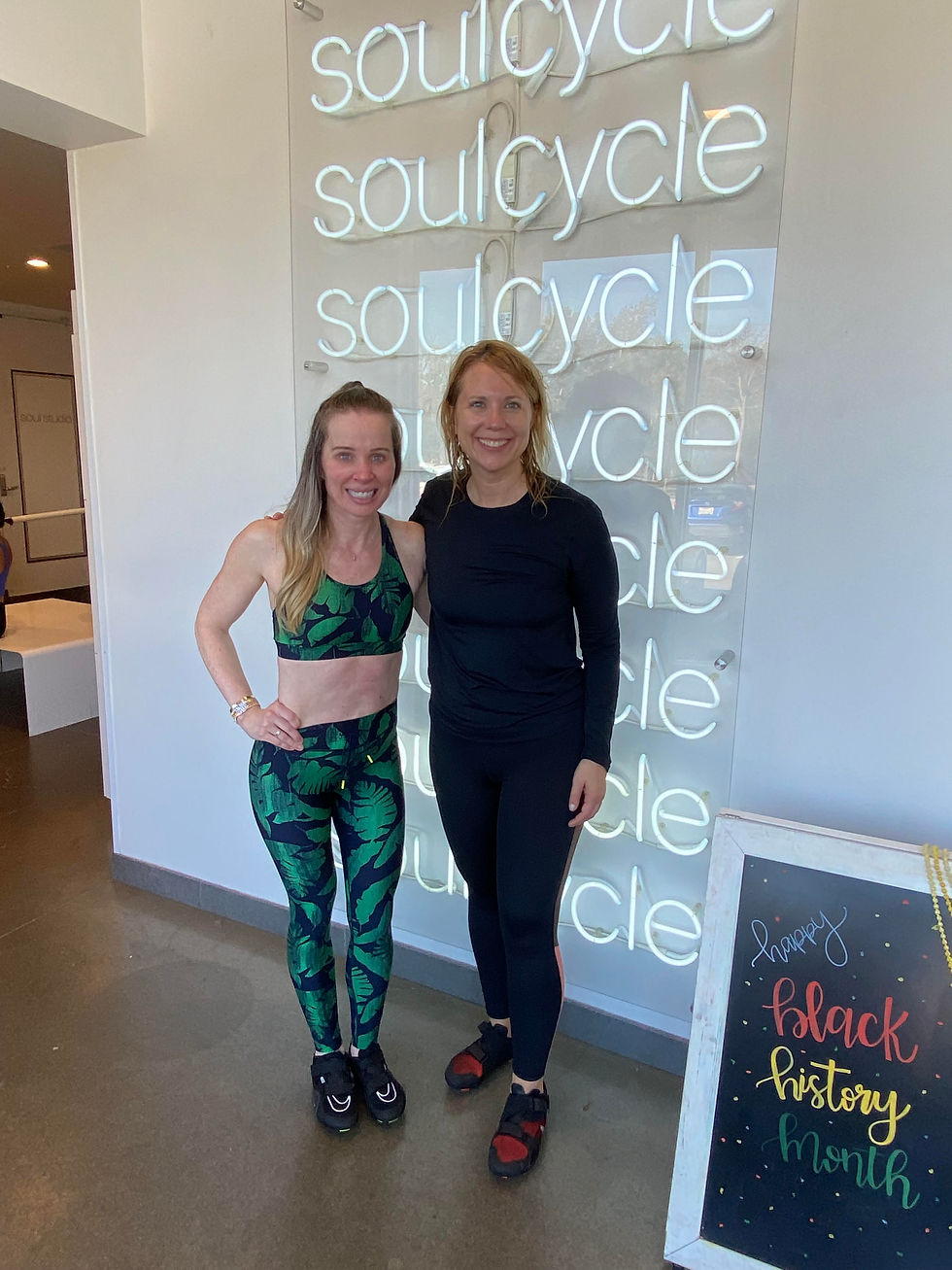
In that stretch of time, I became a regular at SoulCycle Dallas. Ashley Page, a fairly new instructor at that time (now a rockstar), had the 8:30 a.m. Sunday class, the only one I could reliably sneak away for. That hour was my lifeline. It was the only predictable time that belonged fully to me. Nothing about it felt like grind culture. On that bike, in that dark room, it was cathartic. It was uplifting. It was the rare experience of being around other people who were allowed to feel joy, or sadness, or anything at all, without needing to explain themselves. Somehow, Ashley and the entire Soul team made that hour feel like it was solely for me - my place to move some energy.
Why It Was Never Just “Cardio”
I want to pause and name the physical workout component of SoulCycle. Cardio seems to have picked up a bit of a “bad rap” lately—like it’s old school or out of vogue—but in terms of heart health, endurance, and mental well‑being, good cardio is incredible. SoulCycle built its whole model on making that cardio feel fun, immersive, and emotional, and for me, that combination just worked. I’ve never seen indoor cycling as a replacement for other forms of movement; it’s one powerful piece of a bigger picture. In those seasons when I was riding regularly, I felt stronger, my legs and glutes felt like they could carry me for days, and those five‑pound weights somehow transformed into what felt like a thousand‑pound climb during arm isolations (IYKYK).
Even as an avid indoor cyclist (and outdoor too on occasion) I still engage in other forms of movement. I lift heavy weights. I strength train. I practice slow yoga and do deep stretches that are sometimes harder than anything I do on the bike. For me, rhythm riding has never been an “us versus them” situation, you know...Pilates versus cardio versus lifting versus yoga versus running versus walking, or even traditional spin versus rhythm riding.
It’s all of it, together. It’s another way of asking my body: Where does this energy need to go? What if I let it move instead of store it? What if today I grab the five‑pound weights instead of the twos, or turn the resistance up (or down), or simply listen to my body in motion? SoulCycle (and then FireCycle) taught me that there is a beautiful place for those questions with a room full of strangers, the lights low, the music loud, where you can give whatever you’ve got, even if today that’s only 10%, and offer it right back to yourself.
The Ride Before The Funeral
If I had to name “the most memorable ride I ever had,” it wouldn’t be about performance or metrics or even music. It would be a morning in 2021, the day of my mother‑in‑law’s funeral. In‑person classes had just started back up after pandemic closures, and I went to an early a.m. class with Ashley.
There were maybe six of us in the room. No one was cheering. Everyone felt like they were carrying something heavy, even if I didn’t know their stories and they didn’t know mine. Ashley had no idea what was going on in my life. She walked up to my bike, keeping a respectful distance, and said, “Hey. I’m really glad you’re here. Thank you for being here.”
And then we rode.
Ashley poured into the room with her words and her energy, and I let myself receive it. That’s what spaces like this do when they’re at their best. They become containers where as human beings all the physical grief, stress, joy, anger, disappointment and hope can just simply exist in motion instead of getting trapped.
No one knew why I was there.
But they knew I needed a ride, and that was enough.
What I Took Home With Me
Back home, we had traditional spin classes. They were solid workouts—good output, no frills, and even lots of fun. I’m grateful for those classes; they helped me maintain an indoor cycling rhythm when driving to Dallas wasn’t possible. But I kept longing for that specific kind of space: dark room, curated music, intentional words, and a sense of shared humanity that goes beyond “Did you hit your numbers?" or "Turn it up to a level 8-12.”
I wasn’t longing for SoulCycle itself. (Plus, Abilene is not the SoulCycle target market, and I love Abilene.) I was longing for the kind of community and emotional permission SoulCycle had shown me was possible inside a fitness class. The ability to sweat next to strangers, who also sometimes become friends, all of us silently agreeing to move some energy we don’t have language for.
After leaving my executive role at Abilene Education Foundation in 2022, I found myself at a crossroads. I spent a year working with life coach Chris Chandler, who happens to be a master SoulCycle instructor, to gain clarity on what was next for my life and work. Our time together wasn’t about cycling, but it gave me a deeper appreciation for what instructors like Chris and Ashley do every single day: hold space, tell the truth, and consistently show up with a physical and mental level of commitment that is unparalleled in many indoor fitness arenas. It reminded me that when rhythm riding is done well, the person on the podium isn’t just calling out cues; they are quietly stewarding the well‑being of the room.
FireCycle: My Small, Local Love
By 2019, after approximately the hundredth time telling my husband that I wished we had a rhythm riding studio in Abilene, I realized I wasn’t going to stop thinking about it. I also knew I could never recreate what SoulCycle built—nor did I want to. Their story is theirs. What I could do was translate a small, local version of that feeling into my own community: a room where people could sweat in the dark, listen to excellent music, hear something they needed to hear, and feel a little less alone.
FireCycle was born from that place.
At FireCycle, the 14 bikes aren’t just equipment; they’re invitations. Invitations to show up exactly as you are, to move whatever you’re carrying, and to remember that community can happen in spaces that don’t look like the traditional places we associate with connection. Community can happen at church, work, heck, even at a bar, and it can also happen on a stationary bike, in the dark, with people you might never see again but will always remember riding beside.
Riding With Gratitude, Even As The Industry Changes
SoulCycle has changed over the years. It expanded, tightened, and, more recently, has closed multiple studios across the country as the fitness landscape and consumer habits shift. These additional closures and instructors I follow who are “out of a job” are what prompted this blog. I am traveling to Denver in July, and I was sad to realize I couldn’t add a SoulCycle ride to my trip because that location is now gone. The industry is evolving, and so is SoulCycle’s footprint.
But when I do find a studio in a city I’m visiting, I still clip in. I still ride. I still feel that thread of gratitude for the space that gave me language and context for the kind of studio I wanted to build back home. I don’t have insider knowledge of their corporate decisions, and I’m not here to defend or critique them. I’m simply here to say: thank you, SoulCycle.
Thank you for showing me that a fitness class could feel like a sanctuary.
Thank you for proving that people will show up, over and over, for community and catharsis, not just for calorie burn, because movement is a gift.
Thank you for lighting the spark that became FireCycle.
Because of you, there’s a small, scrappy independent rhythm riding studio in Abilene, Texas, where people get to sweat in the dark, move their energy, and be reminded that even in the hardest seasons, they are not alone.
And every time the lights go down and the first beat drops, that, to me, still feels like love.
Forever a rider,
Christine xo


Comments